- Gymnastics does come with injury risks, which vary based on a child’s age, skill level, and whether they train recreationally or competitively.
- Recreational gymnastics has different demands than competitive gymnastics. Beginner classes focus on foundational skills and gradual progression before kids move on to harder skills.
- Look for age-appropriate instruction, well-maintained equipment, trained coaches, and a culture where kids feel comfortable speaking up. You should be able to see those things in action when you visit a gym.
Cartwheels across the living room inevitably turn into requests for gymnastics classes. And somewhere between “Can I try it?” and signing up, you may find yourself wondering: Is gymnastics safe for kids?
At the Dominique Dawes Academy, we know firsthand what the sport demands of athletes. Our experience has helped shape an academy where kids can learn at their own pace and ask for help when they need it.
So, what should you actually look for when choosing gymnastics for kids? Here’s everything you need to know about gymnastics safety before you sign your child up.
Recreational vs. Competitive Gymnastics: Why the Distinction Matters
When you hear “gymnastics,” your mind might jump straight to Olympic routines. Your child’s first recreational class is going to look a bit different.
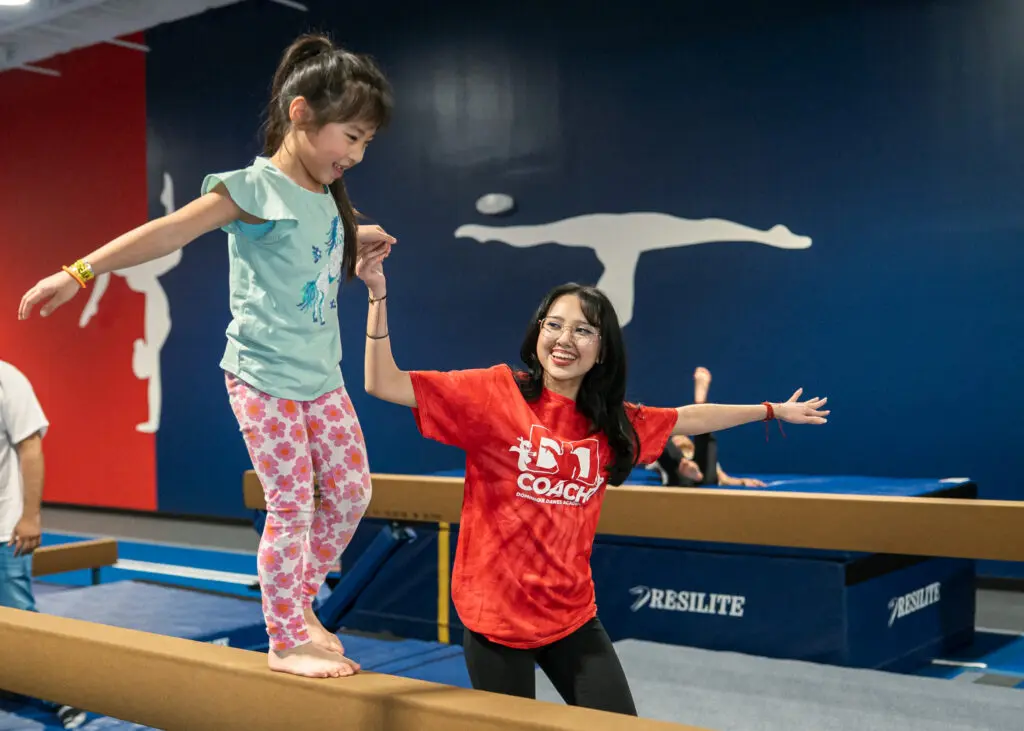
At Dominique Dawes Academy, our recreational gymnastics classes use a progressive skill-building system. Beginners start with foundational skills like rolls, cartwheels, handstands, and balancing, then work toward harder skills as they’re ready.
There’s no need to race to the next skill, either. Students must master the beginner level and get an instructor’s recommendation before moving into intermediate classes. This pacing gives kids plenty of time to get comfortable before adding harder skills.
Equipment Standards and Facility Safety
When you visit a gym for the first time, take a look around and watch a few minutes of class. Is the space organized? Are coaches paying attention as kids work through their skills? If something looks questionable, ask about it.
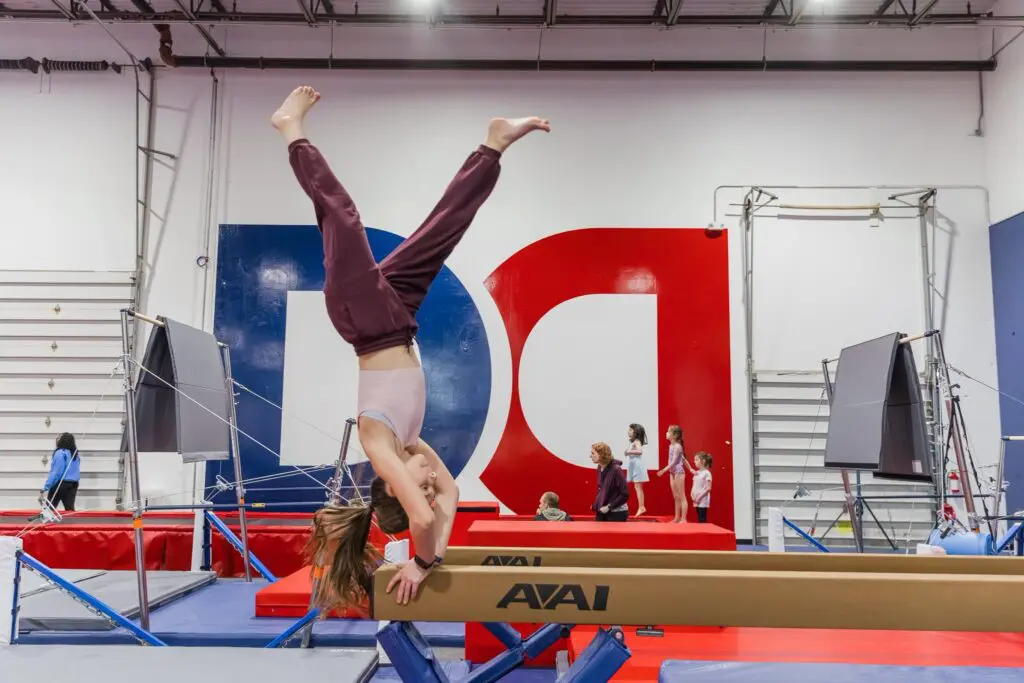
Mats, beams, bars, and plenty of space are all part of the fun, but the equipment should fit the child using it. Our facilities follow American Academy of Pediatrics guidelines and use age-appropriate, well-maintained equipment.
Common Gymnastics Safety Myths Parents Believe (And What’s Actually True)
- Myth: Kids need to start really young to be good at gymnastics.
Reality: There’s no race to the balance beam. Younger kids can start by getting comfortable moving, climbing, rolling, and following instructions, then take on new skills when they’re ready. - Myth: Recreational gymnastics is basically risk-free.
Reality: Kids can still get hurt in recreational gymnastics, which is why they should build foundational skills before moving on to harder ones. - Myth: A foam pit means a gym is safe.
Reality: Mats and foam pits are only part of the picture. How well the equipment is maintained and how coaches support kids through new skills matter just as much. - Myth: Kids have to be naturally flexible to do gymnastics.
Reality: Your child doesn’t need to show up ready to do the splits. They can develop flexibility as they learn gymnastics. They don’t need to bring it with them on day one. - Myth: A tough coaching style gets better results.
Reality: Kids can be challenged without dreading their next mistake. That’s one reason Dominique built the academy around a more compassionate coaching culture. Kids should be able to make a mistake, get help, and keep learning without feeling bad.
How to Talk to Your Child’s Gymnastics Coach About Safety
You don’t need to wait until something goes wrong to talk with your child’s coach. Pay attention to what your child says after class. If they keep mentioning pain, feel nervous about a skill, or seem reluctant to say something in class, bring it up with the coach.
Encourage your child to ask for help, too, especially if something hurts or they don’t understand what they’re being asked to do. The sooner a coach knows something is bothering your child, the sooner they can talk through it together.
Questions Worth Asking at a Trial Class or Orientation
A trial class gives you a chance to see a kids gymnastics program in action before committing. You don’t need to arrive with a clipboard and a 20-point gymnastics safety checklist, either. Simply ask a few good questions:
- “How do kids move up to harder skills?” Look for an approach based on readiness rather than simply age or time spent in class.
- “How are coaches prepared to work with kids safely?” Ask what training and screening coaches complete, as well as how they help a child who feels nervous or uncomfortable with a skill.
- “What happens if my child needs help during class?” Kids should know who to turn to and feel comfortable asking questions.
- “Can I watch a class before enrolling?” Seeing the program in action lets you see how coaches teach and how kids respond.
Pay attention to your child’s reaction, too. You can ask all the right questions, but how they feel after class is equally telling. They should feel comfortable going back.
So, is gymnastics safe for kids?
Gymnastics comes with risks, but the right program gives kids time to learn at their level and move on when they’re ready. It should also give them a coach they feel comfortable turning to when they need help.
Give your child a strong start with gymnastics classes designed for where they are today and where they’re ready to go next. Because there’s nothing quite like watching them walk out of class proud of what they just learned.
Frequently Asked Questions
At what age can kids safely start gymnastics?
There isn’t a universal starting age. What matters is finding a class designed for your child’s age and stage. Dominique Dawes Academy offers junior gymnastics classes starting at 18 months, when little ones can explore movement with a parent or caregiver before moving into more independent classes as they grow.
What should my child expect in a beginner gymnastics class?
Expect plenty of movement and time to get comfortable with the basics. Kids can work on rolls, cartwheels, handstands, and balancing while building coordination and body awareness along the way. No previous gymnastics experience is needed. They can start with the basics and build from there.
Is recreational gymnastics safer than competitive gymnastics?
Research has found fewer injuries in recreational gymnastics than in competitive gymnastics, with injury risk increasing at higher competitive levels and with greater exposure to competition. Recreational gymnastics still carries some risk, but what a child trains and how often makes a difference.
What certifications should a gymnastics coach have?
Requirements vary by program, so ask how a gym prepares and screens its coaches. For adult recreational members, USA Gymnastics coach requirements include background screening, SafeSport education, and concussion education. At Dominique Dawes Academy, coaches receive safety training that covers spotting techniques and first-aid training.
How do I know if a gym is safe before enrolling my child?
Go see it in action if you can. Watch how coaches interact with the kids and how they care for the equipment. Pay attention to what happens when someone needs a little extra help, too. Ask how kids move into harder skills. By the time you leave, you should have a good idea of how the gym handles safety and what your child’s experience there would actually look like.