Key Takeaways:
- DDA’s Junior Gymnastics program offers parent-assisted classes starting at 18 months, with independent beginner classes available for children as young as 3. Ages and availability may vary by location.
- Recreational gymnastics welcomes children at different ages and skill levels. Competitive gymnastics requires additional readiness and training.
- Your child’s comfort with group activities, ability to follow simple directions, and willingness to try new movements can help you decide when they’re ready.
- A trial class at Dominique Dawes Academy can help you find the right fit.
Wondering what age to start gymnastics for your child? Maybe your toddler loves climbing on everything, or your 5-year-old is doing cartwheels around the house. You can see their interest growing, but are they ready for their first class?
At Dominique Dawes Academy, founded by three-time Olympian Dominique Dawes, we know every child develops at their own pace. In this guide, we’ll help you understand what gymnastics looks like at different ages and what to consider before signing up.
What Does “Starting Gymnastics” Actually Mean for Young Kids?
For little ones, gymnastics starts with play. Children get comfortable exploring new movements and discovering what their bodies can do. No one is expected to perform tricks or master routines.
At Dominique Dawes Academy, our Seeds program lets children ages 18 months to 3 years explore movement alongside a parent or caregiver. When they’re ready for more independence, potty-trained 3-year-olds can join our Seedlings program to begin learning basic gymnastics skills with guidance from our coaches.
Recreational Gymnastics vs. Competitive Training — Not the Same Starting Line
Recreational gymnastics lets kids discover new skills at their own pace, with plenty of room to build confidence along the way. Competitive gymnastics is a great next step for athletes ready for more advanced skills and a bigger training commitment.
At DDA, qualifying athletes can start competitive gymnastics at age 5. But there’s no rush to compete. We love celebrating the little victories, from trying something new to finally landing a skill they’ve been practicing.
The Best Age to Start Kids’ Gymnastics — A Stage-by-Stage Breakdown
Ages 18 Months–3 Years — Parent-Child Programs
Toddler gymnastics classes focus on exploring movement together. The American Academy of Pediatrics’ toddler activity guide notes that children around 19–24 months develop movements such as squatting, running, and jumping.
In DDA’s Seeds classes, parents join their little ones for semi-structured activities with age-appropriate equipment. With a familiar grown-up nearby, toddlers can explore the gym and try new movements at their own pace.
Ages 3–5 Years — Beginner Structured Classes
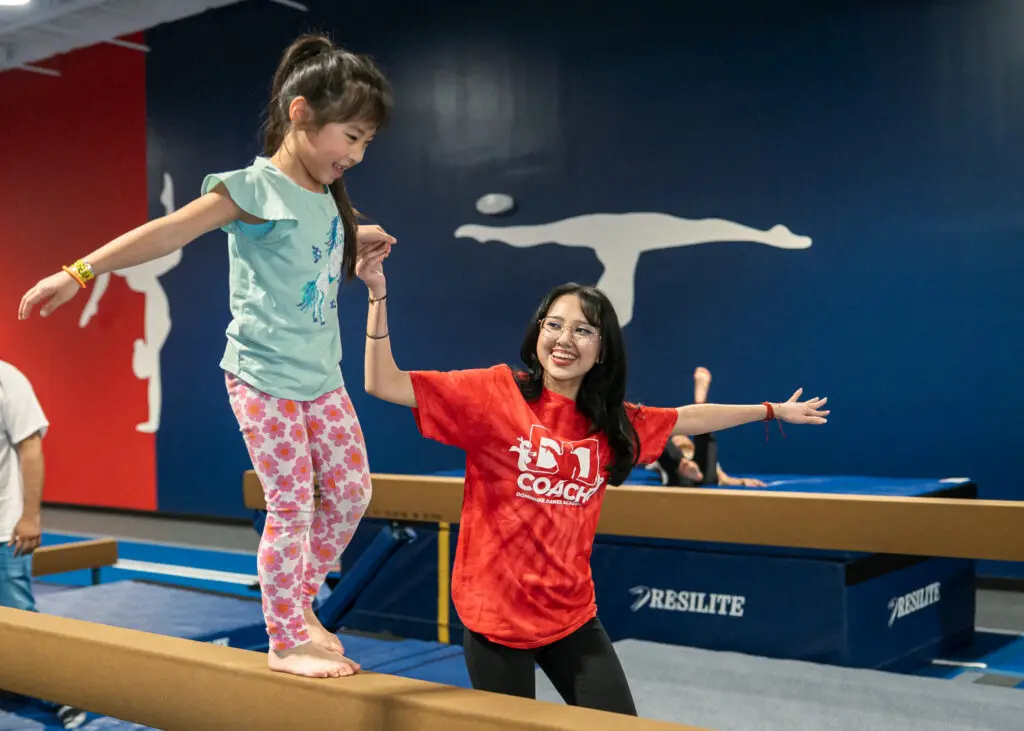
Many children this age are ready to follow simple instructions and begin practicing gymnastics skills with a little more independence. At DDA, our Seedlings program welcomes 3-year-olds, while Sprouts introduces 4-year-olds to equipment like the balance beam and tumble track.
By ages 5–6, kids in Buds can build on those skills. You can also encourage their interest with beginner gymnastics exercises to try at home.
Ages 6–10 Years — Skill Development and Optional Competition Track
Starting gymnastics at 6, 8, or even 10 years old? There’s still plenty of room to learn and grow. Older beginners are often ready for more independent practice and more detailed instructions. Our recreational gymnastics program welcomes children ages 6 and older, giving beginners room to build on the basics and tackle new skills as their confidence grows.
Why Starting Gymnastics Young Builds a Foundation for Life
- Balance and Coordination: Practicing rolls and balance exercises helps kids improve their coordination and gain better control over their movements.
- Confidence and Body Awareness: There’s something special about watching your child master a skill they’ve been practicing. Each small victory helps them feel proud of what they can do and excited to take on the next challenge.
- Listening and Following Directions: Taking turns and listening to coaches give children opportunities to practice patience and focus. These skills can also help them in school and other group activities.
- Safe Movement Habits: Learning proper body positions and landing techniques helps children practice moving with greater control. Coaches introduce these skills gradually, based on each little one’s abilities.
- A Love for Staying Active: When movement is fun, kids want to stay active. The CDC recommends daily activity for ages 3–5 and at least 60 minutes for ages 6–17. Kids gymnastics is a fun after-school activity to help them get moving.
- Focus and Problem-Solving: As kids practice new skills, they learn to concentrate and work through challenges. These cognitive benefits can help them beyond the gym, too.
How to Choose the Right Gymnastics Class for Your Child’s Age
- Age-Appropriate Classes: Look for gymnastics classes or programs that group children by age and ability so they can learn alongside kids at a similar stage.
- Instructor Attention: Ask about class sizes and how coaches support children who need extra guidance, especially younger beginners.
- Safe Equipment and Supervision: Check that the equipment and mats suit your child’s age, and that coaches closely supervise new skills.
- Trial Class Opportunities: Watch how your child responds to the coaches, follows simple directions, and explores the gym. A trial class can help you see whether they’re comfortable and enjoying themselves.
- A Positive Coaching Philosophy: Look for coaches who celebrate effort and support kids, especially when a new skill takes a few tries.
At DDA, our Junior gymnastics classes give little ones room to explore movement and gradually build independence as they grow.
Common Myths About When Kids Should Start Gymnastics
Myth: Kids Have to Start Gymnastics by Age 3
Worried your child missed their chance? Don’t be! There’s no deadline for recreational gymnastics. Kids can start at 6, 8, or even 10 and still have a great time learning new skills and building confidence.
Myth: Gymnastics Is Only for Girls
Not at all. Gymnastics is for boys and girls alike. Every child deserves the chance to discover what their body can do and enjoy gymnastics’ benefits. At DDA, we welcome both boys and girls into our recreational gymnastics programs.
Myth: Starting Gymnastics Too Young Causes Injuries
It’s natural to have safety questions when your little one starts gymnastics. Age-appropriate classes introduce beginner movements with proper supervision and equipment suited to young children. Every physical activity carries some risk, so choose a class with attentive coaches and instruction suited to your child’s age.
Myth: Kids Need to Be Flexible Before Starting
Can’t touch their toes? No problem. Your child doesn’t need to do the splits or have any special flexibility to join a beginner class. Their coaches will help them develop flexibility gradually as they learn.
Myth: Competitive Gymnastics Is the Only Way to Progress
Who says your child needs a medal to feel accomplished? Recreational gymnastics for kids gives them plenty of opportunities to master new skills and celebrate their progress. They can keep learning and challenging themselves without ever competing.
Ready to Find the Right Gymnastics Class for Your Child?
So, what age should kids start gymnastics? As we learned, there’s no magic number. What matters is finding a class where your child feels comfortable enough to try something new.
At Dominique Dawes Academy, we’ll help you find the right class for your child’s age and abilities. Come join us and see how much fun their first steps can be.